Trendismo.com
News Update
Loading...

vendredi 27 mars 2026

The Driver’s Seat Dilemma: Safety, Sensors, and the Surprising Cost of Autonomy in 2026

 The Driver’s Seat Dilemma: Safety, Sensors, and the Surprising Cost of Autonomy in 2026


To truly understand who is "winning" the autonomous race in 2026, we have to look past the software and into the legal and financial fallout of a crash. This is where the industry splits: some brands are selling a product, while others are selling peace of mind.


1. The Great Liability Divide

The most significant development in 2026 is the "Liability Line." For the first time, some manufacturers are legally admitting that if the car is in control, the company is at fault.

The "Safe & Accountable" Camp (Mercedes-Benz & Lucid)

  • The Policy: Mercedes-Benz has officially stated it will accept full legal and financial liability for accidents that occur while Drive Pilot (Level 3) is active.

  • The Catch: This only applies if the driver has followed all prompts (e.g., taking over when the car says "Weather too poor"). If you ignore a handover request, the liability instantly snaps back to you.

  • Insurance Impact: Owners of these vehicles often see a 15–20% "Autonomy Discount" on their premiums because the manufacturer’s corporate insurance covers the most expensive risk: the "eyes-off" driving period.

The "Supervised" Camp (Tesla)

  • The Policy: Despite the name "Full Self-Driving," Tesla remains a Level 2 (Supervised) system. Their user agreement explicitly states the driver is 100% responsible at all times.

  • The Catch: If a Tesla on FSD v14.3 hits a curb or another car, the owner's personal insurance pays. Tesla does not assume liability because the human is the "backstop."

  • Insurance Impact: Tesla has mitigated high traditional premiums by offering its own Tesla Insurance. By using real-time driving data (Safety Score), they offer rates up to 30% lower than GEICO or State Farm, but only if you drive "precisely."


2. 2026 Performance & Cost Breakdown

FeatureMercedes-Benz S-ClassTesla Model 3/Y/S/XWaymo (Robotaxi)
Max Speed60 mph (95 km/h)Highway Speed Limits45-65 mph (Geofenced)
Primary SensorsLiDAR, Radar, CamerasCameras Only (Vision)Multi-LiDAR, Radar, Cameras
Human RoleRelax/Watch MovieConstant SupervisionNot Required (Passenger)
Hardware CostIncluded in MSRP ($115k+)Included in MSRP ($40k+)$100k+ (Fleet only)
Software Fee~$2,500/year (Sub)$99/monthPer-mile fee

3. The Winner's Circle: Category by Category

Winning on Safety & Law: Mercedes-Benz

Mercedes is winning the "trust race." By using LiDAR (which can "see" in pitch black and fog where cameras fail), they have convinced regulators to let drivers look away. In 2026, if you want a car that legally allows you to be a passenger on the highway, Mercedes is the only choice.

Winning on Utility: Tesla

Tesla is winning the "everywhere race." While Mercedes only works on specific, pre-mapped highways in clear weather, Tesla’s End-to-End AI (v14) can navigate a dirt road in a storm or a chaotic construction zone in downtown Chicago. It’s not "hands-off," but it handles 99% of the work.

Winning on pure Tech: Waymo

Waymo is the only true Level 4 winner in 2026. While you can't buy one for your garage yet, their 24/7 driverless service in cities like Phoenix, LA, and Austin has proven that a car with no human inside is actually 85–90% safer than a human-driven car.


4. Future Outlook: The "Insurance Pivot"

By the end of 2026, we expect to see "Hybrid Policies." Major insurers (Progressive, Allstate) are preparing to launch policies where your premium is split:

  1. A low rate for miles driven by the AI (product liability).

  2. A higher rate for the miles you drive yourself (human error).


Top 5 Electric Cars to Watch in 2026: Range, Tech, and Pricing Breakdown


Top 5 Electric Cars to Watch in 2026: Range, Tech, and Pricing Breakdown


The electric vehicle (EV) market is accelerating at an unprecedented pace. As we look ahead to 2026, a new generation of EVs is poised to redefine our expectations for range, performance, and affordability. These aren't just incremental updates; they are standard-bearers for new platforms, battery technologies, and software capabilities that will shape the future of transportation.

For those planning their next vehicle purchase or simply fascinated by automotive innovation, 2026 is shaping up to be a landmark year. From a reimagined Bavarian icon to groundbreaking trucks that offer staggering utility, these are the five electric cars that deserve your full attention.

We’ve analyzed the confirmed details, credible projections, and manufacturing timelines to bring you this definitive breakdown.


1. The BMW 'Neue Klasse' Sedan: The Reinvention of an Icon


BMW is on the cusp of its most significant transformation in decades. The "Neue Klasse" (New Class) is not just a single car; it is a dedicated EV platform that will underpin the core of BMW’s future lineup. The first model, a sleek sedan roughly the size of the 3 Series, is set to arrive in 2026, and it promises to be revolutionary.

Why It’s a Game-Changer:

The Neue Klasse introduces BMW's sixth-generation eDrive technology. This moves away from current prismatic battery cells to a new, cylindrical cell design (similar in form factor to those used by Tesla). This engineering shift is key to maximizing efficiency.

Range and Charging: BMW claims the new cylindrical cells offer 20% higher energy density. Crucially, the platform utilizes an 800-volt architecture. This combination is projected to deliver ranges well over 400 miles (643 km) on a single charge and, perhaps more importantly, enable charging speeds that can add 186 miles (300 km) of range in just 10 minutes.

Technology and Interior: The Neue Klasse moves beyond conventional screens. It will debut 'BMW Panoramic Vision,' a new head-up display that projects vital information across the entire width of the windshield. The entire user interface (the next iteration of iDrive) will be highly intuitive, relying on voice, multi-function steering wheel controls, and Central Display interaction, creating a clutter-free "phygital" (physical + digital) environment.

Estimated Pricing: The sedan is expected to be priced competitively with current internal combustion 3 Series and the i4, starting roughly around $55,000 to $65,000.


2.(Next Generation): Affordable Freedom Returns


The discontinuation of the original Chevrolet Bolt EV (and its EUV sibling) was a blow to affordable EV adoption. However, GM CEO Mary Barra quickly confirmed its return on the advanced Ultium battery platform. The next-generation Bolt EV, arriving by 2026, aims to reclaim its crown as the value champion.

Why It’s a Game-Changer:

The first Bolt was defined by its utility and remarkable range for the price. The new Bolt will leverage the economies of scale offered by GM's modular Ultium platform. This shift significantly reduces manufacturing complexity and battery costs, which GM is expected to pass directly to the consumer.

Range and Charging: By switching to Ultium, the new Bolt will finally move past the 55 kW DC fast-charging limitation of its predecessor. We expect standard charging speeds exceeding 150 kW. The range will likely increase from the previous 259 miles to a very competitive 275 to 310 miles (442–498 km).

Technology: The new Bolt will feature GM’s latest infotainment software (now built on Google Automotive OS), likely utilizing a large, unified screen layout similar to the Chevrolet Blazer EV. Most importantly, it is highly likely to offer GM’s excellent Super Cruise hands-free driving assistance as an option.

Estimated Pricing: This is the Bolt’s killer feature. GM aims to keep it incredibly affordable. Projections place the starting price near or even slightly below $30,000, making it one of the most accessible EVs on the market (especially when factoring in potential tax credits).


3. Rivian R2: The Accessible Adventure SUV


Rivian disrupted the electric truck market with the brilliant R1T and R1S, but their high price point limits their reach. Enter the Rivian R2. Scheduled for a full reveal in 2024 with deliveries starting in 2026, this mid-size SUV platform is designed to make Rivian's adventurous spirit accessible to a mainstream audience.

Why It’s a Game-Changer:

The R2 will compete directly in the hottest segment of the market—the one currently dominated by the Tesla Model Y. It promises to shrink the R1’s adventurous capability, clever storage solutions (like the "Gear Tunnel"), and distinct design into a smaller, far more affordable package.

Range and Charging: Rivian has stated the R2 will prioritize efficiency. It is expected to utilize standard CCS charging (or NACS/Tesla ports, as Rivian is adopting the standard) and provide a competitive 300+ miles (482+ km) of range across multiple battery configurations.

Technology: The R2 will inherit the advanced software architecture pioneered in the R1. This includes robust over-the-air (OTA) update capabilities, the intuitive "Rivian OS" interface, and likely a sophisticated suite of driver-assistance sensors, positioning it well for advanced autonomous features. The interior is expected to maintain the R1's minimalist yet durable and sustainable material aesthetic.

Estimated Pricing: Rivian CEO RJ Scaringe has targets a starting price between $40,000 and $50,000, positioning the R2 as a primary competitor to the Model Y and the Ford Mustang Mach-E.


4. Volkswagen ID. Buzz (3-Row North American Model): Nostalgia Meets Utility


After years of concept reveals and European-market success, the long-wheelbase, three-row version of the Volkswagen ID. Buzz is finally arriving in North America in 2025 as a 2026 model. It’s an EV that successfully mines deep nostalgia while delivering genuine, flexible utility.

Why It’s a Game-Changer:

There is nothing else like the ID. Buzz. It is not just another SUV; it’s a modern reinterpretation of the iconic T1 Microbus. It addresses a specific need in the market: a family-focused EV that maximizes passenger space and cargo flexibility without adopting the standard three-row SUV form factor. The design, both exterior and interior, is uniquely playful.

Range and Charging: To accommodate the larger, heavier vehicle and the needs of North American drivers, the 3-row Buzz gets a larger 91 kWh battery. This will provide a crucial range boost over the European model, with estimates landing around 260 to 280 miles (418–450 km). It will support DC fast charging at speeds up to 170 kW.

Technology: The ID. Buzz features the latest iteration of VW’s ID. software (version 4.0 or newer), which addresses early criticisms regarding responsiveness and user interface. It includes a large 12.9-inch central infotainment screen, a standard ID. Cockpit digital cluster, and clever features like "ID. Light"—an intuitive light strip below the windshield that provides visual cues for navigation and charging status. It also will offer sophisticated massaging seats and a large panoramic sunroof that can opacify at the touch of a button.

Estimated Pricing: The ID. Buzz is not positioned as a budget EV. Given its unique features, large battery, and importation from Germany, we expect starting prices for the long-wheelbase model to be in the $60,000 to $70,000 range.


5. GMC Sierra EV Denali Edition 1: The Luxury Workhorse


While the GMC Hummer EV grabbed headlines for its absurdity, the upcoming GMC Sierra EV is the truck designed for high-end utility. Following the initial rollout of the premium "Edition 1" in 2024, the full 2026 lineup, featuring various trims and expanded capabilities, will represent the peak of luxury electric trucking.

Why It’s a Game-Changer:

The Sierra EV, built on the Ultium platform, focuses on redefining what a capability-focused luxury truck can be. Its key feature is the "Midgate," allowing the 5-foot-11-inch bed to expand into the cabin, enabling the hauling of items over 11 feet long with the tailgate up. It also has a massive "eTrunk" (frunk). It is designed to be a mobile power source, capable of powering a home or off-grid tools.

Range and Charging: The initial Edition 1 will come standard with a staggering GM-estimated 400+ miles (643+ km) of range on a full charge. This range is achieved via a massive battery pack. Crucially, the Sierra EV features an 800-volt DC fast-charging architecture, allowing it to add 100 miles (161 km) of range in approximately 10 minutes at a 350 kW charger.

Technology: The Sierra EV features a 16.8-inch diagonal free-form infotainment touchscreen—the largest in its class. Super Cruise hands-free driver assistance will be standard. The driving experience will be managed by customizable drive modes, including "Max Power" (delivering a projected 754 hp and 785 lb-ft of torque) and the famous 4-wheel steer "CrabWalk" capability.

Estimated Pricing: The initial, fully-loaded Sierra EV Denali Edition 1 is expected to start around $107,000. However, GMC has indicated that subsequent models and trims (like the AT4 and Elevation) will be introduced for the 2026 model year, bringing the starting price closer to $50,000 to $60,000 range.

Final Thoughts on the 2026 Landscape

The EVs arriving in 2026 demonstrate that the "early adopter" phase is over. We are moving into an era defined by:

  1. Platform Maturity: Platforms like BMW's Neue Klasse and GM's Ultium are optimized for efficiency, manufacturing speed, and scale.

  2. Addressing Key Anxieties: We see standard ranges pushing well past 300 miles and 800-volt architectures becoming more common, making 10-minute charging stops a reality.

  3. True Market Segmentation: The market is no longer just composed of luxury sedans or crossovers. We now see highly functional options in the crucial "affordable segment" (Bolt), the "accessible adventure segment" (R2), and the "true utility segment" (ID. Buzz and Sierra EV).

2026 will be a fantastic year for consumers. Whether you prioritize cutting-edge technology, maximum affordability, adventure readiness, or maximum utility, there is a groundbreaking electric vehicle on the horizon designed exactly for you.

jeudi 26 mars 2026

Top 5 Tech Trends Changing Everyday Life in 2026


Top 5 Tech Trends Changing Everyday Life in 2026

2026 is no longer about futuristic “what‑ifs” — it’s about how technology quietly reshapes how we live, work, travel, and even relax. From your pocket to your car, to your smart home, a few powerful trends are blending into daily routines. Here are the top five tech trends changing everyday life in 2026, with simple explanations and real‑world examples you can plug into your blog.


1. AI That Works for You, Not Just “With” You

2026 Tech Trends Banner 

Artificial intelligence is no longer just a chatbot you type questions into; in 2026, AI is embedded into almost every app you use.

  • Your email, calendar, and shopping apps now suggest replies, plan meetings, and even book trips without you clicking through dozens of screens.
  • In cities, AI helps optimize traffic lights, public transport, and delivery routes, which means shorter waiting times and fewer traffic jams.


2. Self‑Driving and Robotaxi Services Going Mainstream

Self‑driving cars are moving from test tracks to real‑world city streets in 2026.

  • In cities like Las Vegas, Phoenix, and some European hubs, robotaxis (driverless ride‑hailing cars) are becoming a normal option for short trips and airport rides.
  • Features like advanced driver‑assistance systems (ADAS) are now standard in many mid‑range cars, helping with parking, lane‑keeping, and emergency braking.


3. Smarter, Leaner Personal Devices

Your phone, laptop, and smartwatch are getting more powerful while becoming less obtrusive.

  • New chips and on‑device AI let your phone run complex tasks (translation, photo editing, voice commands) without constant internet, making things faster and more private.
  • Wearables now track health metrics like blood‑oxygen saturation, stress levels, and sleep stages, helping you adjust your habits before problems appear.


4. Streaming and Content: Less Endless, More Personal

Streaming services are still huge, but they’re changing fast.

  • Libraries are getting tighter, content is more targeted, and subscriptions are often bundled (TV + music + games) so you pay less for more.
  • AI‑driven recommendations now learn not just what you like, but when you watch: for example, it suggests short videos during your commute and long movies for weekend nights.


5. Tech That Blends Into Your Life (Not Your Home)

In 2026, technology is becoming invisible rather than flashy.

  • Smart homes adjust heating, lighting, and security based on your habits; you don’t need to open five apps to control your house.
  • Payment systems, loyalty cards, and ID are increasingly handled by contactless phones, wearables, or biometrics, so you rarely pull out cash or even a physical card.


 Samsung Galaxy S26 Ultra : LE FLAGSHIP STAR 2026

Samsung Galaxy S26 Ultra : LE FLAGSHIP STAR 2026

 le Samsung Galaxy S26 Ultra un nouveau très haut de gamme tourné vers l’IA

Samsung Galaxy S26 Ultra — visuel officiel

Le Samsung Galaxy S26 Ultra marque une nouvelle étape dans la stratégie premium du constructeur coréen. Présenté lors du Galaxy Unpacked 2026 à San Francisco, ce modèle se positionne comme le smartphone le plus ambitieux de la gamme Galaxy S, avec une combinaison de puissance brute, d’outils d’intelligence artificielle, d’un module photo avancé et d’une nouveauté particulièrement mise en avant par Samsung : un écran “Privacy Display” intégré, pensé pour protéger le contenu affiché contre les regards latéraux. Samsung le décrit aussi comme son Ultra le plus fin à ce jour, tout en conservant un grand écran de 6,9 pouces et une fiche technique très haut de gamme. Samsung Newsroom Samsung US

Un design plus fin, plus propre et toujours très premium

Avec le Galaxy S26 Ultra, Samsung affine sa recette plutôt que de la bouleverser. Le téléphone adopte une silhouette plus mince, annoncée à 7,9 mm, pour un poids de 214 g. La marque insiste sur une esthétique plus cohérente, avec une courbure retravaillée, une finition soignée et un châssis en Armor Aluminum qui vise à combiner robustesse et élégance. En main, l’idée est claire : proposer un smartphone imposant mais plus facile à utiliser au quotidien qu’un ultra-flagship traditionnel. Samsung US Samsung Newsroom

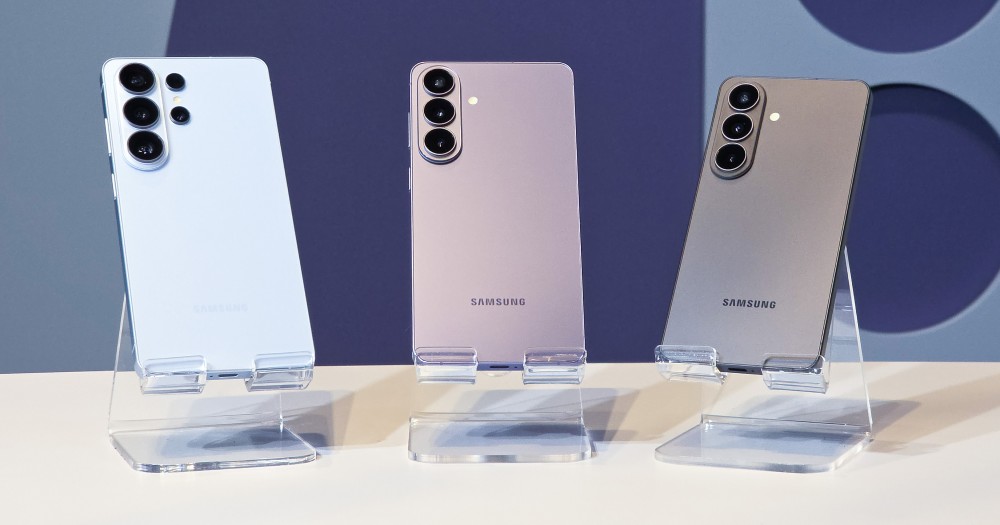
Samsung met également en avant plusieurs coloris pour ce modèle : Cobalt Violet, Sky Blue, White et Black. Ce choix contribue à rendre le S26 Ultra un peu moins strict visuellement que certains anciens Ultra, tout en conservant un positionnement clairement premium. Samsung US Samsung Newsroom

Galaxy S26 Series — aperçu officiel Samsung

Un écran immense, mais surtout une vraie nouveauté : le Privacy Display

L’un des arguments les plus originaux du Galaxy S26 Ultra est son “Privacy Display” intégré. Samsung présente cette fonction comme une première mondiale sur mobile. Concrètement, l’écran reste lisible de face, mais limite la visibilité depuis les côtés afin de mieux protéger les messages, notifications, mots de passe ou applications sensibles lorsque l’on se trouve dans un train, un avion, un ascenseur ou tout autre espace public. L’utilisateur peut même l’assigner au bouton latéral via un double appui pour l’activer rapidement. Samsung US Samsung Newsroom

Au-delà de cet aspect confidentialité, le téléphone conserve tous les codes d’un écran Ultra moderne : dalle de 6,9 pouces, rendu ultra-vif, grand confort multimédia et expérience pensée pour la consommation de contenus, le jeu et la retouche photo. Samsung le présente comme l’un de ses affichages les plus avancés, avec une restitution visuelle immersive qui sert autant les usages créatifs que le divertissement. Samsung US

Des performances de très haut niveau pour l’IA et les usages intensifs

Samsung décrit le Galaxy S26 Ultra comme le smartphone Galaxy S le plus puissant à ce jour. La marque évoque un processeur personnalisé pour Galaxy, avec des gains annoncés de 19 % en traitement CPU, 24 % en performances graphiques et 39 % côté NPU, c’est-à-dire pour les traitements liés à l’intelligence artificielle. Cette montée en puissance sert autant la fluidité générale que les fonctions IA embarquées, la photo computationnelle, le multitâche et les usages lourds comme le jeu ou le montage mobile. Samsung US Samsung Newsroom

Côté mémoire et stockage, le S26 Ultra est proposé en 256 Go avec 12 Go de RAM, 512 Go avec 12 Go de RAM, et jusqu’à 1 To avec 16 Go de RAM. Cette configuration confirme le positionnement “sans compromis” du produit : il s’adresse à ceux qui veulent conserver beaucoup de vidéos, de photos, de jeux et de fichiers, tout en gardant une excellente marge de manœuvre pour les années à venir. Samsung US

La photo reste un pilier majeur du Galaxy S26 Ultra

Samsung continue de faire de l’Ultra son porte-étendard photo. Le Galaxy S26 Ultra embarque un capteur principal de 200 mégapixels à ouverture f/1.4, accompagné d’un ultra grand-angle de 50 MP, d’un téléobjectif 50 MP et d’un second téléobjectif 10 MP avec zoom optique 3x. Samsung Newsroom précise aussi un zoom optique 5x avec qualité optique jusqu’à 10x sur certains usages mis en avant, ce qui montre que la marque continue d’exploiter à la fois l’optique et le traitement logiciel pour proposer une grande souplesse de cadrage. Samsung US Samsung Newsroom

L’un des progrès les plus mis en avant concerne la basse lumière. Samsung affirme que la caméra principale bénéficie d’une ouverture plus large, avec une luminosité améliorée de 47 % dans certaines situations, afin de produire des vidéos plus nettes et plus détaillées la nuit. La marque insiste également sur l’amélioration de la Nightography, devenue un argument central pour les utilisateurs qui filment souvent en soirée, en intérieur ou dans des environnements peu éclairés. Samsung US Samsung Newsroom

Exemple officiel Samsung autour de la photo et de la Nightography

Samsung évoque aussi des améliorations sur la caméra frontale grâce à l’extension de l’AI ISP, c’est-à-dire du traitement d’image assisté par IA. L’objectif annoncé est de mieux préserver les détails fins — cheveux, sourcils, textures — tout en gardant des tons de peau plus naturels. Sur le papier, cela devrait intéresser autant les amateurs de selfies que les créateurs de contenus qui publient en vertical pour les réseaux sociaux. Samsung Newsroom

Exemple officiel Samsung mettant en avant les détails du capteur 200 MP

Galaxy AI : un téléphone qui veut anticiper vos besoins

Le Galaxy S26 Ultra n’est pas seulement un smartphone puissant ; c’est aussi un appareil construit autour des usages IA. Samsung met en avant plusieurs fonctions comme Now Nudge, capable de faire remonter des informations contextuelles utiles au bon moment, et Now Brief, destiné à synthétiser des informations personnalisées. L’idée générale est de limiter les allers-retours entre applications et de rendre le téléphone plus proactif dans son aide au quotidien. Samsung US Samsung Newsroom

Samsung souligne aussi l’évolution de Circle to Search avec Google, désormais plus capable d’analyser plusieurs éléments à la fois, ainsi que l’intégration d’un écosystème IA élargi avec Bixby, Gemini et Perplexity. Dans la démonstration officielle, Samsung montre par exemple qu’un utilisateur peut formuler une demande naturelle comme “Mes yeux sont fatigués”, puis laisser l’assistant proposer directement le mode de confort visuel adapté, sans naviguer manuellement dans les réglages. Cela résume bien la philosophie du S26 Ultra : moins de friction, plus d’automatisation contextuelle. Samsung Newsroom

Une édition photo dopée à l’IA, pensée pour le grand public

Samsung mise fortement sur la simplification créative. Le Galaxy S26 Ultra permet d’éditer des photos via des commandes en langage naturel. La fonction Photo Assist peut retirer un élément gênant, reconstruire une partie de l’image, transformer l’ambiance d’une scène ou ajuster certains détails de façon plus intuitive que les outils classiques. Samsung donne même l’exemple d’un gâteau auquel il manquerait une bouchée, que l’IA peut restaurer visuellement comme s’il était intact. Samsung US Samsung Newsroom

Cette logique se prolonge avec Creative Studio, présenté comme un espace où l’on peut générer des stickers, des visuels ou d’autres éléments créatifs à partir de simples prompts textuels. Autrement dit, Samsung cherche à faire du S26 Ultra non seulement un excellent appareil de capture, mais aussi un mini studio de création mobile pour les utilisateurs qui veulent produire, publier et personnaliser sans sortir de leur téléphone. Samsung Newsroom

Illustration officielle Samsung de Photo Assist

Autonomie, recharge et usage quotidien

Samsung annonce jusqu’à 31 heures de lecture vidéo pour le Galaxy S26 Ultra, avec une recharge rapide permettant d’atteindre jusqu’à 75 % en environ 30 minutes. Ces chiffres confirment une ambition claire : faire du téléphone un appareil capable d’enchaîner une grosse journée de travail, de photo, de vidéo, de streaming et de navigation sans générer une anxiété permanente liée à la batterie. Samsung US

Dans un segment où la performance maximale s’accompagne souvent de chauffe et de consommation élevée, Samsung insiste aussi, via sa communication de lancement, sur l’optimisation globale entre le processeur personnalisé, la gestion thermique et l’intelligence artificielle. Pour l’utilisateur final, l’avantage attendu est simple : un téléphone plus rapide, plus constant et plus agréable, même lors d’usages intensifs. Samsung Newsroom

Les grands avantages du Galaxy S26 Ultra

Le premier avantage du S26 Ultra est sa polyvalence. Peu de smartphones réunissent à ce niveau un grand écran premium, une configuration photo aussi complète, des outils IA transversaux, une forte capacité de stockage et une approche orientée confidentialité. Pour un utilisateur exigeant, cela signifie moins de compromis entre productivité, loisirs, création et sécurité visuelle. Samsung US

Le deuxième avantage est son approche “pratique” de l’IA. Samsung ne se contente pas d’ajouter des fonctions gadgets ; la marque tente d’intégrer l’intelligence artificielle dans des actions très concrètes : rechercher, retoucher, rédiger, suggérer, simplifier les réglages, ou encore aider à capturer de meilleures images. Cette orientation peut rendre le téléphone plus utile au quotidien qu’un simple surplus de puissance théorique. Samsung Newsroom

Le troisième avantage est photographique. Entre le capteur principal 200 MP, la Nightography améliorée, les téléobjectifs, les outils de retouche IA et le traitement renforcé sur la caméra frontale, le Galaxy S26 Ultra vise clairement les utilisateurs qui veulent un appareil de poche capable de couvrir la plupart des situations, du portrait au zoom, de la nuit au selfie, de la photo brute à l’édition rapide. Samsung US Samsung Newsroom

Enfin, le quatrième avantage est différenciant : le Privacy Display. Sur un marché où beaucoup de smartphones se ressemblent, cette fonction apporte une réponse concrète à un problème réel de la vie quotidienne. Pour les professionnels, les voyageurs fréquents ou simplement ceux qui tiennent à leur intimité, cet argument peut peser lourd. Samsung US Samsung Newsroom

Prix et disponibilité

Samsung a dévoilé la série Galaxy S26 le 25 février 2026, avec une disponibilité commerciale annoncée à partir du 11 mars sur certains marchés. Aux États-Unis, AT&T affiche le Galaxy S26 Ultra à un prix de détail de 1 299,99 $ pour la version 256 Go, avec aussi des variantes 512 Go et 1 To. Comme toujours, les tarifs et offres peuvent varier selon les pays, les opérateurs et les promotions de reprise. Samsung Newsroom AT&T

Verdict : faut-il s’intéresser au Samsung Galaxy S26 Ultra ?

Oui, clairement — surtout si vous cherchez l’un des smartphones Android les plus complets du moment. Le Galaxy S26 Ultra ne révolutionne pas totalement la formule Ultra, mais il la pousse plus loin sur presque tous les axes importants : puissance, IA, confidentialité, photo, autonomie perçue et confort d’usage. Samsung cherche moins à impressionner par une seule innovation spectaculaire qu’à proposer un ensemble extrêmement cohérent et mature. Samsung US Samsung Newsroom

Pour les passionnés de photo mobile, les utilisateurs intensifs, les professionnels souvent en déplacement et tous ceux qui veulent un smartphone premium orienté intelligence artificielle sans sacrifier la partie matérielle, le S26 Ultra apparaît comme une proposition très solide. Son vrai point de distinction pourrait bien être ce mélange rare entre performance “Ultra” et utilité quotidienne tangible. Samsung US Samsung Newsroom

Notification
This is just an example, you can fill it later with your own note.
Done